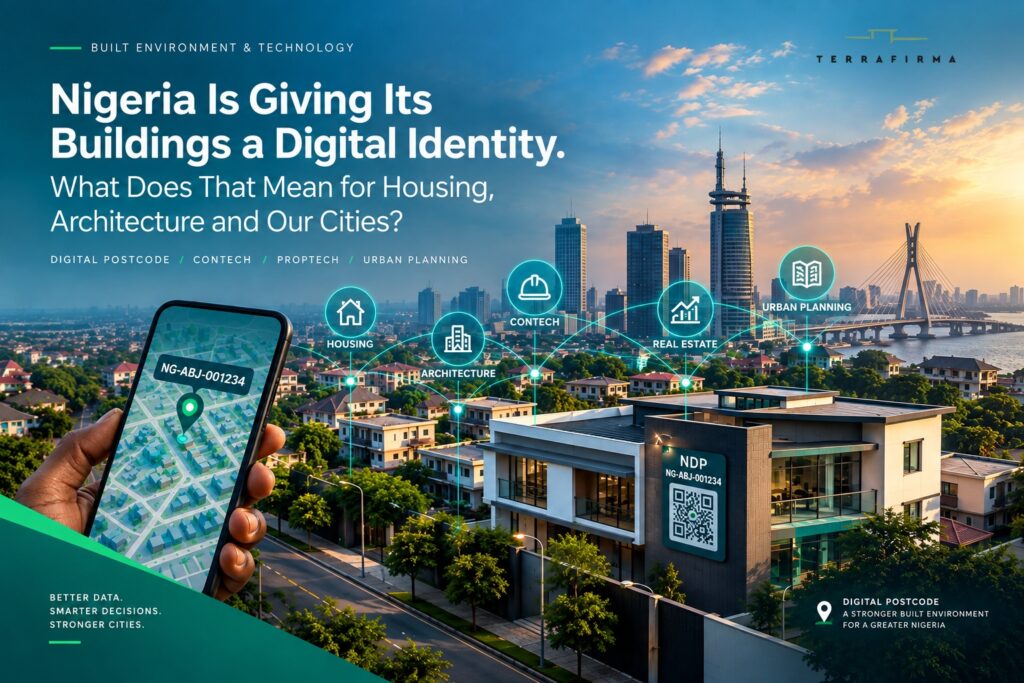
Nigeria is moving towards a new era of digital addressing, with the National Digital Alphanumeric Postcode System set to give addressable buildings across the country unique, geographically anchored digital identities. What sounds like a postal reform could have much wider implications for architecture, urban planning, real estate, construction technology (ConTech), property technology (PropTech), infrastructure and facilities management.
For Nigeria’s built environment, reliable building-level location data could create new possibilities for site selection, property development, construction management, digital building records, asset management, emergency response and smarter urban planning. It could also provide an important digital layer connecting information across the building lifecycle, from design and construction to occupation, maintenance and redevelopment.
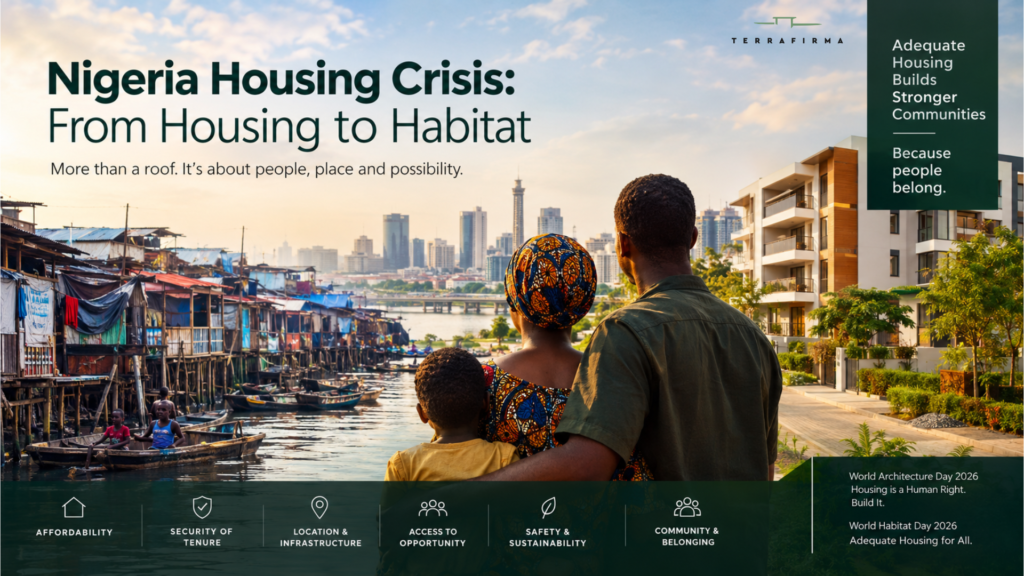
The timing is significant. As World Architecture Day 2026 asks us to reflect on “Housing is a Human Right. Build It.” and World Habitat Day 2026 focuses on “Adequate Housing for All,” Nigeria’s digital addressing initiative raises a broader question: if we want to build better cities and deliver adequate housing, do we also need better ways to identify, understand and manage the places where people already live?
Explore what Nigeria’s digital postcode could mean for architects, developers, planners, construction professionals, PropTech and ConTech innovators — and the future of the built environment.